


A training space does not compete just to “have machines.” Compete for something more decisive: the real experience of training inside the space.
When the place is well planned and well equipped, training becomes simpler, safer and more consistent.
That is why design has a direct relationship with performance (and fidelity): a good dSpace design improves the flow of movement and makes training more enjoyable, efficient and sustainable.
- Perceived performance goes up when space reduces friction: clear circulation, well-defined zones and quick transitions.
- The flow of movement determines the “useful time” of training: less waiting, more quality per minute.
- A correct design elevates the premium perception: order, security and control.
- evergy = comprehensive approach: experience design + equipment.

1) The flow is the product
Most centers believe they sell training. Actually, it also sells:
- comfort (everything is where it should be),
- security (no crossings or dangerous areas),
- clarity (space is understood at first glance),
- rhythm (you train without interruptions).
That “rhythm” is the flow. And the flow is what makes the user think:
“You train well here.”
This is what drives them to return, to recommend and for the space to be perceived as premium.
2) Design → behavior → performance
Design influences how people behave:
- If the material is far away, people trim heating or accessories.
- If there are bottlenecks, people wait and loses intensity.
- If the areas are mixed, the people avoid uncomfortable or “annoying” tasks.
- If there is no clear area of mobility, that part is jump.
Result: you can have a good training “on paper”, but a worse execution due to the environment. And when that happens, quality goes down, frustration goes up, and continuity goes down.

3) The 5 principles of a space that make people want to train there
1) Clear zoning (no interference)
Divide space by intention:
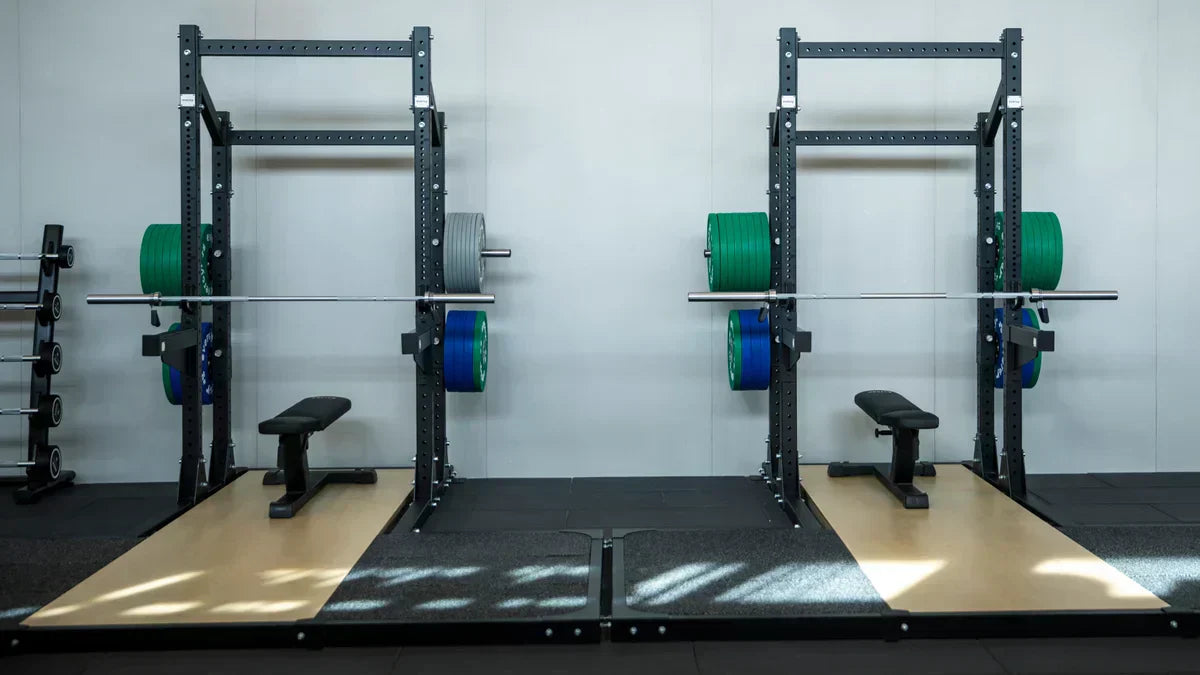
- Strength (loads, racks, bars)
- Technique / skills (movements that require focus)
- Conditioning (rhythm, transitions, dynamics)
- Mobility / recovery (pre and post, without “getting in the way”)
When the areas are clear, the user orients himself. This reduces stress and improves the experience.
2) Clean circulation
The flow is broken when there is:
- constant crossings,
- narrow hallways,
- crash points (discs + step + jumps + people).
Solution: obvious routes, avoid crossovers between strength and conditioning, and leave small “buffer zones” to hydrate, breathe or reset.
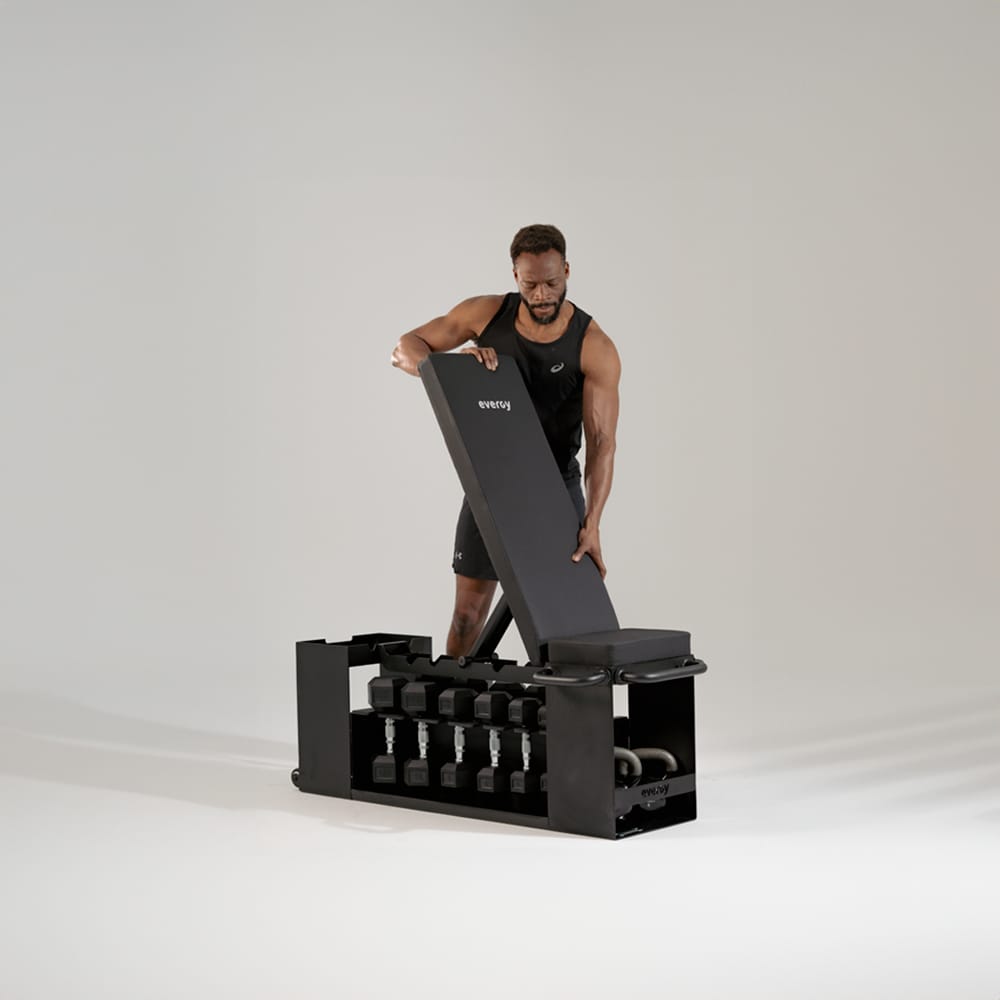
3) Storage with logic
Storage is not “keeping”. It is to accelerate training.
- The most used, by hand (discs, zippers, dumbbells, kettlebells).
- The punctual, ordered by categories.
- Zero searches: the user should not “set up the session” searching for things.
A center with top material but poorly stored feels worse than one with less material, but well planned.

4) Visibility and control
Demanding users value
- see your work area,
- see the next station,
- feel like everything is under control.
And for the team, visibility improves security and makes sessions more fluid.
5) “Useful time” as a real design KPI
A well-designed space increases the percentage of the session that is actual training.
Minuses:
- you wait,
- unnecessary trips,
- improvisation,
- eternal montages.
More:
- quality,
- consistency,
- repetition.
4) How to translate it into a space that works (without complicating it)
A scheme that usually works especially well:
- Entry + clear welcome (immediate guidance)
- Warm-up/mobility near the start (for it to happen, not for “when there is room”)
- Strength in stable zone (no traffic around)
- Conditioning in dynamic zone (without crossing loads)
- Recovery/final mobility (natural session closure)
- Perimeter and station storage (not chaotic central)
You don't need more complexity: you need intention.
5) Evergy's role: designing spaces that work
This is where it makes the difference: it is not just about choosing equipment, but about designing the whole so that the space performs.
evergy helps:
- define zones according to the type of client and service,
- optimize circulation and congestion points,
- select equipment that makes sense for flow (not “fill”),
- elevate premium perception through order, coherence and experience.
When the space is well planned, training well stops being an extra effort... and becomes normal.

Quick checklist: signs that your space is “winning”
- The user understands the organization of space in 10 seconds
- There are no clashes or absurd waits between zones
- The material is where it is used (no searches)
- The session happens naturally: warm-up, work, conditioning, recovery
- The space feels premium for order and control, not decoration
Conclusion
People don't get hooked on a center just because of the machines. He gets hooked because training there feels different. And that is designed: a clear route, well-defined areas, logical storage, frictionless transitions and material that responds the same today as it will in six months.
When the space is well planned, very specific things happen: wasted time is reduced, the quality of execution improves, the coach can direct better and the user perceives a high standard from the first session. In other words: design becomes performance and performance becomes fidelity.
evergy not only equips. It provides criteria to design complete spaces: where each area goes, how people move, what material makes sense in each season and how to maintain a premium experience that invites them to return.



Leave a comment
All comments are moderated before being published.
This site is protected by hCaptcha and the hCaptcha Privacy Policy and Terms of Service apply.