
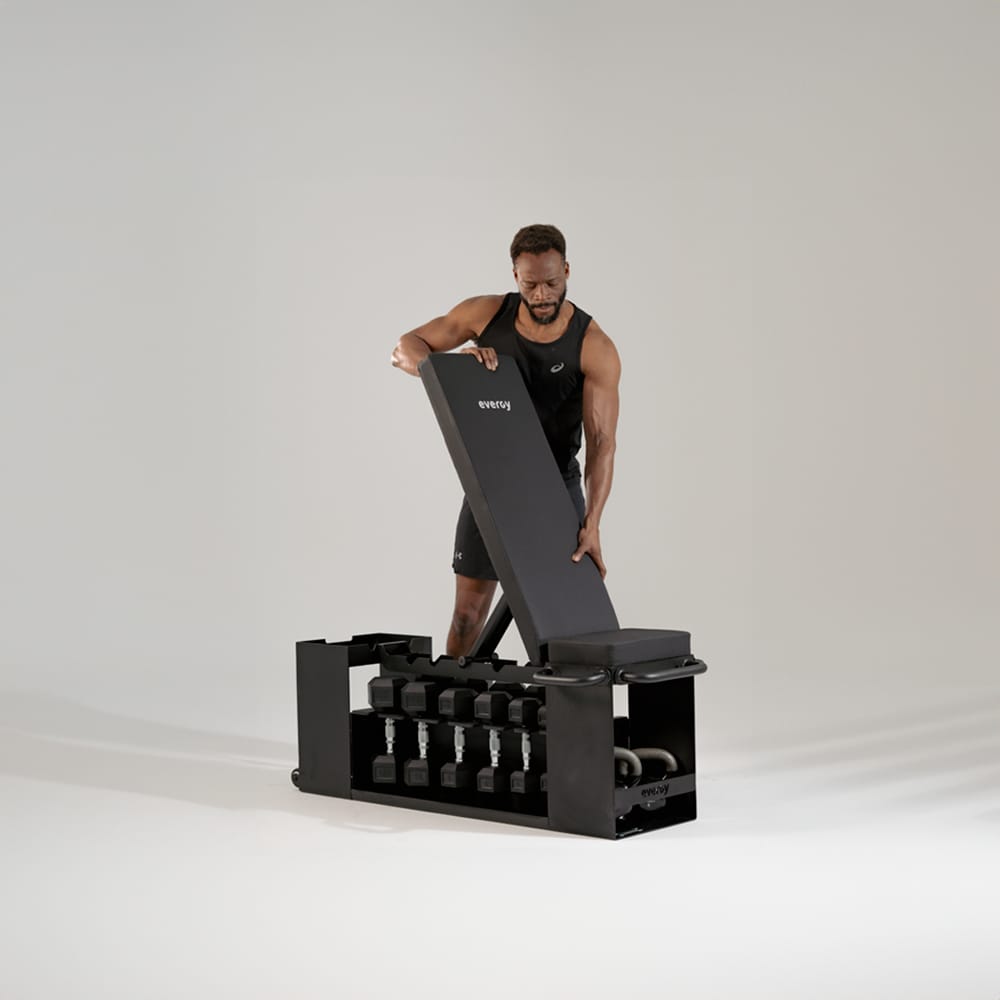







Designing an efficient training space is not about filling a room with equipment, but about creating an environment that facilitates movement, maintains order and improves the user experience. Along these lines, ACSM points out that a well-planned facility must offer a safe environment and also improve the user's exercise experience (ACSM, 2019).

Efficient space starts before assembly
One of the most common mistakes when designing a fitness area is to think first about the equipment and then how it will fit into the room.
When this happens, problems appear immediately:
- uncomfortable routes
- saturated areas
- unclear distribution
- feeling of disorder
The NSCA reminds that a facility must help maximize the safety, effectiveness and efficiency of the available space (NSCA, 2017).
Therefore, at evergy we understand that designing a space well begins long before installing. First you have to define how you are going to train, how much material should coexist in the area, how the users will move and what sensations the set should transmit.

Functionality, order and design must go together
Efficiency doesn't just depend on how many items are in a room, but how they are organized.
A space can be well equipped and still be visually heavy or impractical. Recent evidence in fitness centers shows that users especially value having sufficient training space, as well as well-maintained equipment. Furthermore, an attractive interior also improves the overall perception of the center (Jang et al., 2024).
The idea is clear: optimizing space is not about adding more things. It means better resolving the distribution, reducing interference and ensuring that each element has a clear function within the whole.
How evergy designs spaces with intention
At evergy we work on spaces from a logic that unites real use, order and visual language.
It's not just about placing structures. It's about creating coherent solutions that allow you to train better and maintain a clean reading of the environment.
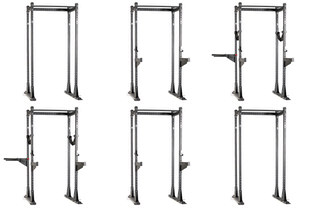
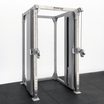
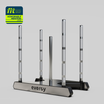
Powerlink responds precisely to that vision. In the catalog it is presented as a modular solution designed to create spaces with intention, uniting movement, design and versatility in the same structure. It is also defined as a system designed to evolve with each installation and adapt to different ways of training.
Powerlink: modularity to optimize space
The value of Powerlink is in its ability to build more efficient spaces without breaking the overall aesthetic.
According to the catalogue, it allows you to start from a simple rack and evolve towards:
- a pulley station
- a multipower
- a more complete configuration
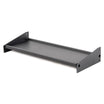
- horizontal and vertical storage
- compatible accessories
This modularity allows functions to be concentrated in the same solution and avoids the dispersion of equipment. Instead of adding disconnected pieces, a more orderly, clearer structure is created, prepared to grow over time.
The catalog itself highlights configurations such as the 1000P, which combines rack and pulley in a compact solution, and the 2000P, which connects two racks through horizontal storage and also integrates a pulley station. Both are designed to improve functionality and efficient use of space.

Storage also designs space
A space stops working well when the material does not have a defined place.
Discs, dumbbells, kettlebells and poorly resolved accessories generate visual noise, hinder circulation and reduce the feeling of quality. Sport England emphasizes that the quality of the design must be worked on from the beginning of the project, with clear objectives and adequate planning (Sport England, 2007).
At Powerlink, storage is part of the system from the beginning. The catalog includes horizontal solutions between racks and vertical options in individual structures, which helps free up useful surface, improve circulation and keep the space visually cleaner.

Materials and finishes that elevate perception
Aesthetics also influence how a facility is perceived.
In the case of Powerlink, the catalog indicates that the two front pillars and the front horizontal arch are made of stainless steel, while the rest of the structure is presented in dark pearl gray to provide visual depth and integrate naturally into different environments.
This reinforces an important idea: a training structure must not only perform well on a functional level. It should also contribute to the character of the space.
Conclusion
Designing an efficient training space is finding a balance between use, order and design.
Industry references agree on the essentials: safety, space efficiency and user experience are key factors in any well-planned installation (ACSM, 2019; NSCA, 2017; Jang et al., 2024).
From this vision, evergy develops solutions such as Powerlink: modular systems that allow you to optimize meters, integrate storage, expand functions and maintain a careful aesthetic without giving up functionality.


Leave a comment
All comments are moderated before being published.
This site is protected by hCaptcha and the hCaptcha Privacy Policy and Terms of Service apply.